Newton’s Laws
You might have heard of Newton's Laws, but do you actually know what people are referring to?
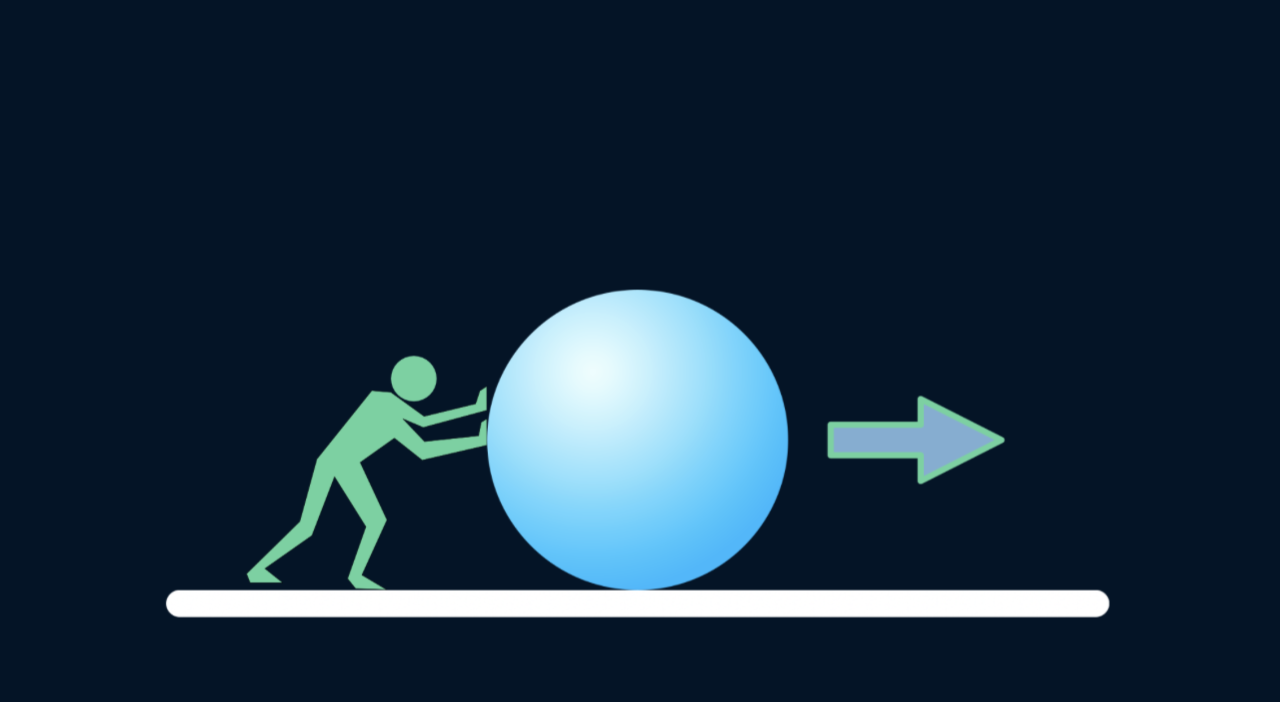
To explain Newton’s First Law, I want you to envision a ball, sitting still on a surface. Now, if I asked you to make the ball move, what would you do?
You would have to push it in order for the ball to start moving.
This brings us to the first law: an object at rest stays at rest unless acted on by an external force. In our example, our ball didn’t start moving until you pushed it.
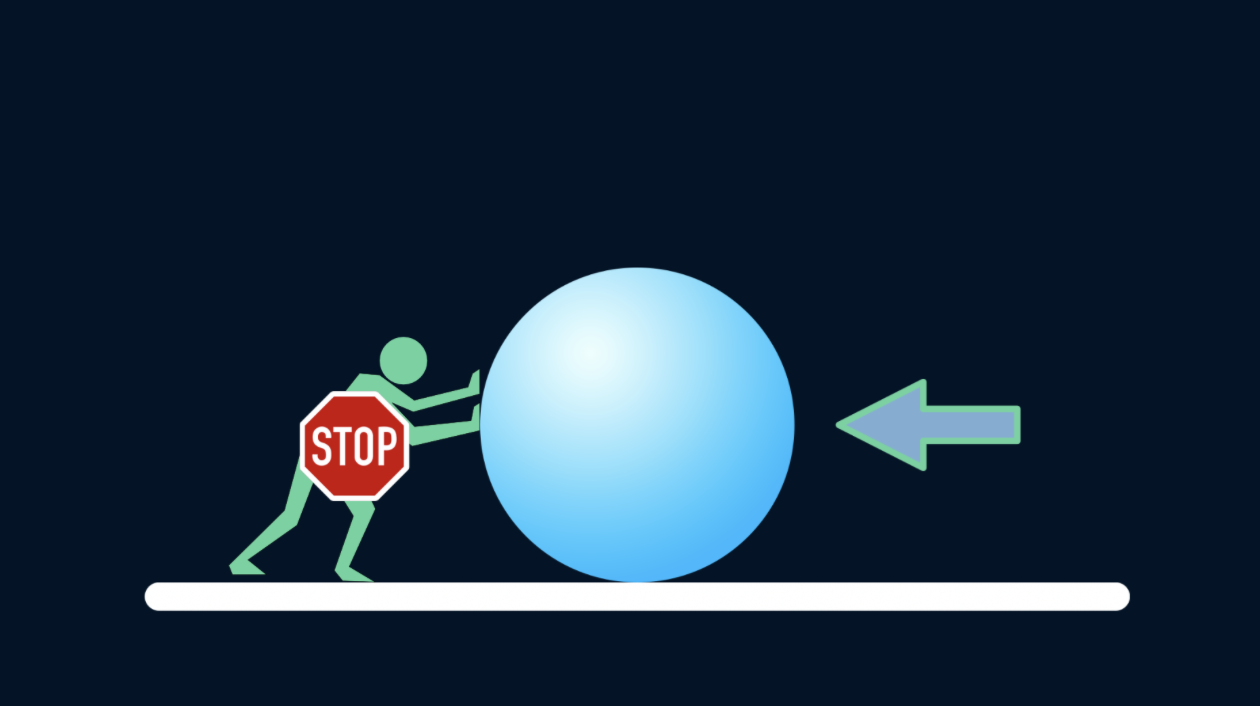
This can also be applied to if the ball started already in motion. Imagine the ball is moving across the surface. How would you stop it?
You would have to touch it and slow it down to rest.
In this scenario, we can reverse the first law: an object in motion stays in motion unless acted on by an external force. The ball would have kept moving if we hadn’t intervened.
This is also known as inertia – an object wants to maintain its state of motion (whether that be moving or not moving).
Now, when it comes to Newton’s Second Law, let’s revisit our previous example. We have a ball, sitting stationary, on a surface. It doesn’t move until you push it. Pushing the ball is considered a force, since you are changing its state of motion (rest→moving).
When we talk about a change in motion, we are talking about a change in velocity. Velocity refers to how fast an object is moving and in what direction it is moving in. So when the ball is at rest, it has a velocity of 0m/s. But when it starts moving, let’s say it has a velocity of 5m/s. This change is called acceleration.
The amount of force you need to get the ball moving, though, depends on how big it is. If you have a 50kg ball vs. a 5kg ball, it would take much less force to get the 5kg ball rolling than the 50kg one.
Hence, when we talk about forces, it depends on the mass of the object, and its acceleration. So the second law says that Force = mass(acceleration).
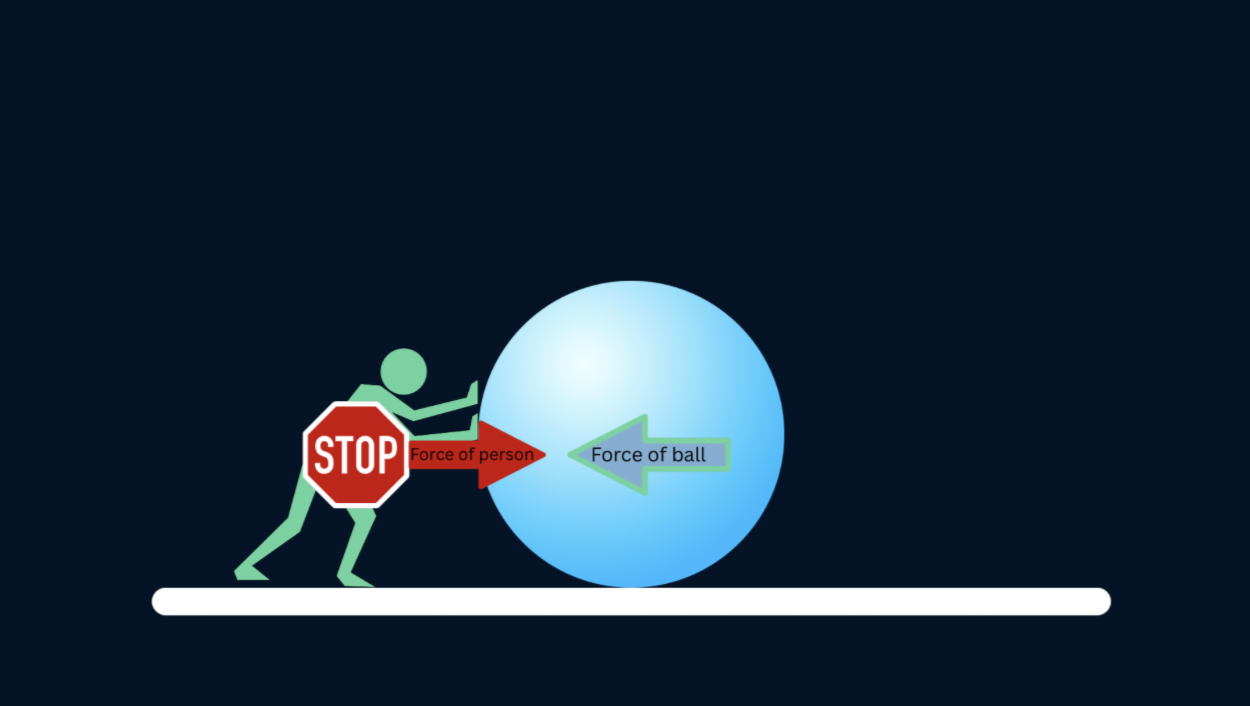
Finally, when we talk about Newton’s Third Law, let’s continue with our ball example, but focus on when we try to stop it. When we stop the ball, you can feel it push against you due to inertia. It wants to keep moving, but you are getting in its way. But, based on what we know, we also have to be exerting a force on it to make it stop. This would mean that with the same action, placing your hand in the ball’s way, there are two forces: you pushing against the ball and the ball pushing against you. This is the third law; the idea that forces come in pairs.